
13. Endurance
Developing Aerobic Power & Capacity

We covered the underlying energy systems that power all movement in our foundational science article. Then we took an in-depth look at the various thresholds that determine the effect of our training. This article will focus on how to develop endurance in your athletes. The ability to repeatedly output effort for extended periods of time is centered on the Aerobic system. As a refresher this is using oxygen, alongside carbohydrates and fats, to fuel movement.
The key takeaways for this article are:
Aerobic System Recap
What is Aerobic Capacity & how is it developed?
Then what is Aerobic Power & how is it developed?
The Endurance Pathway - An Aerobic Recap
The aerobic pathway can use two different fuel sources, carbohydrates and fat. Crucially, it requires the presence of Oxygen to work. We call it the Endurance Pathway because it is relatively slow to produce ATP. It is best suited for long, slow, continuous efforts such as endurance sports, especially if fat is the fuel source being primarily used. It is the “cleanest” energy pathway. The only byproducts of this system are Water and Carbon Dioxide, which are removed during breathing.
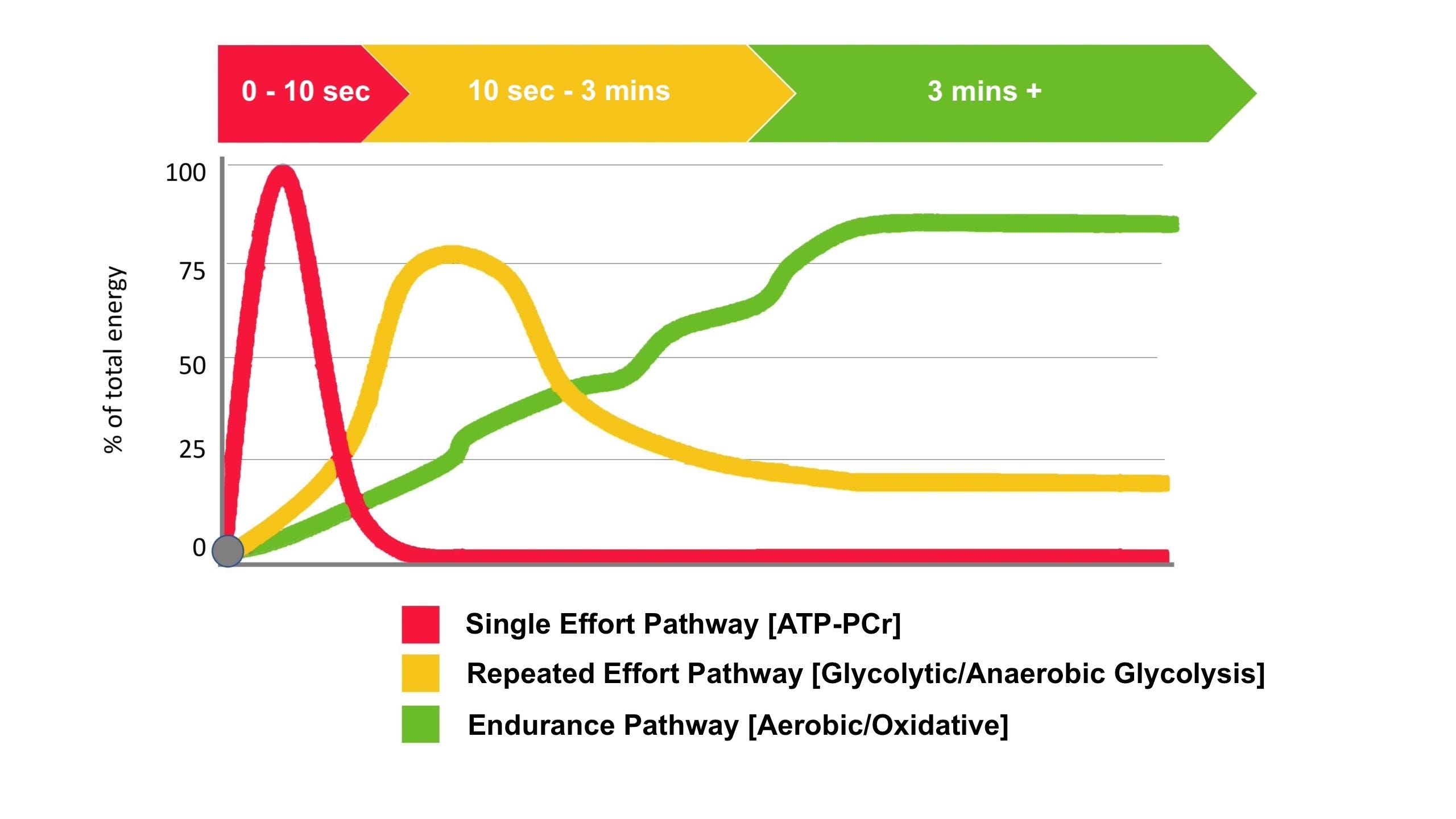
There are two key variables of the aerobic system that can be targeted for improvement; Aerobic Capacity & Aerobic Power.
Aerobic Capacity: refers to the total amount of work that can be sustained by the aerobic system during prolonged exercise
Aerobic Power: refers to the maximum rate of oxygen consumption during intense exercise
Intensity - the key
Getting exercise intensity right is so important when endurance training. We saw this when we explored the thresholds in the last article. If the inset sits is wrong, then your players end up developing different qualities than what you intended. It can seem relatively easy to get the intensity right when working with one athlete, but many of us work with whole teams. In this case players are going to vary greatly in their fitness. Setting the same drill for everyone will result in a mixed range of qualities being developed in the team.
For the easiest example, we’ll explore the following section through running. In practical terms, intensity relates to how fast an athlete is running.
Aerobic Capacity
We’ve already defined aerobic capacity as the amount of work that an athlete could do. To put this in simple running terms, how far can a person run before they can’t physically go anymore. In reality, many other factors are going to force us to stop before we physically run out of energy.
In team sports, athletes are often going to be required to work far beyond their aerobic thresholds. In these cases, high aerobic capacities help them to recover quicker between the high-intensity efforts.
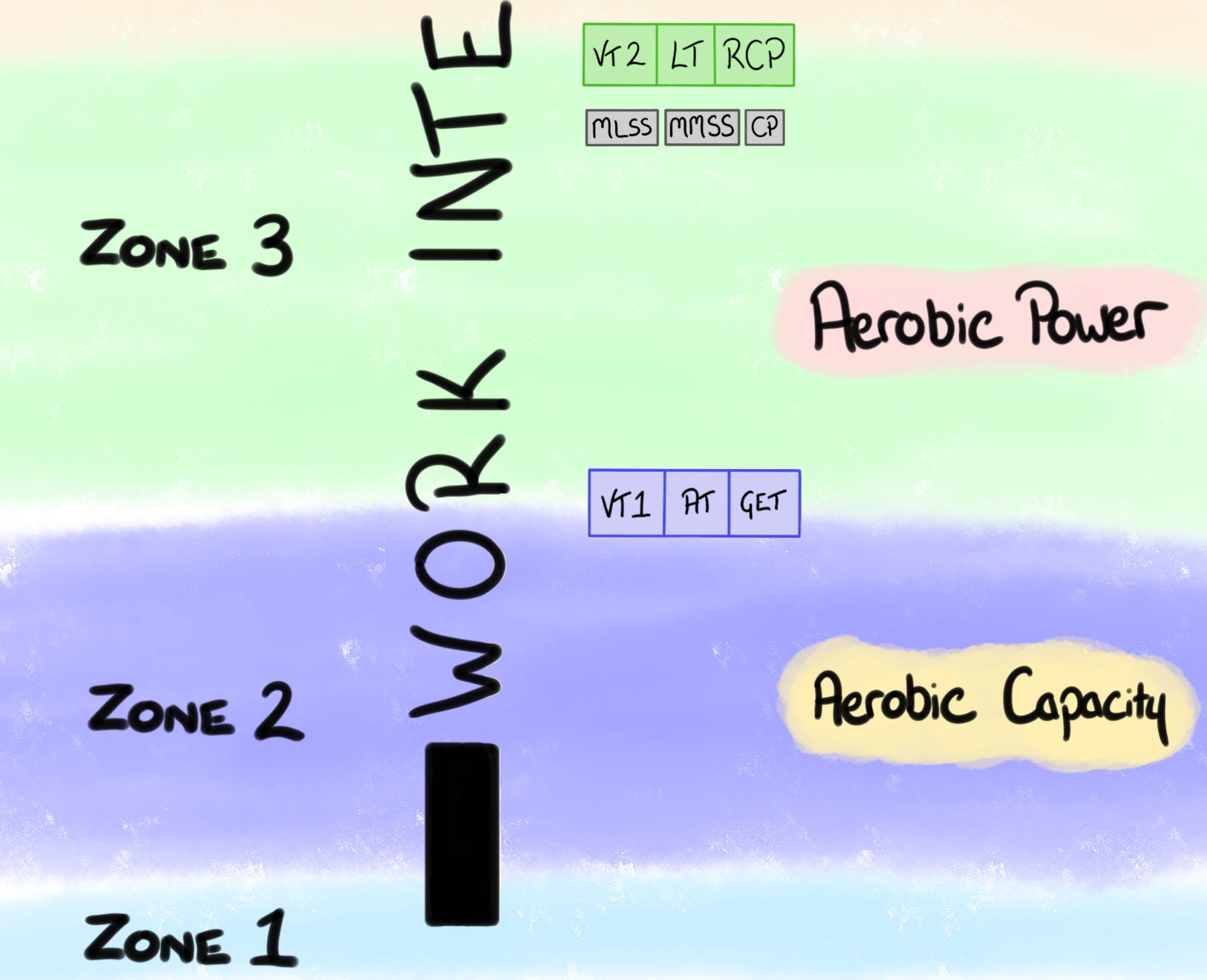
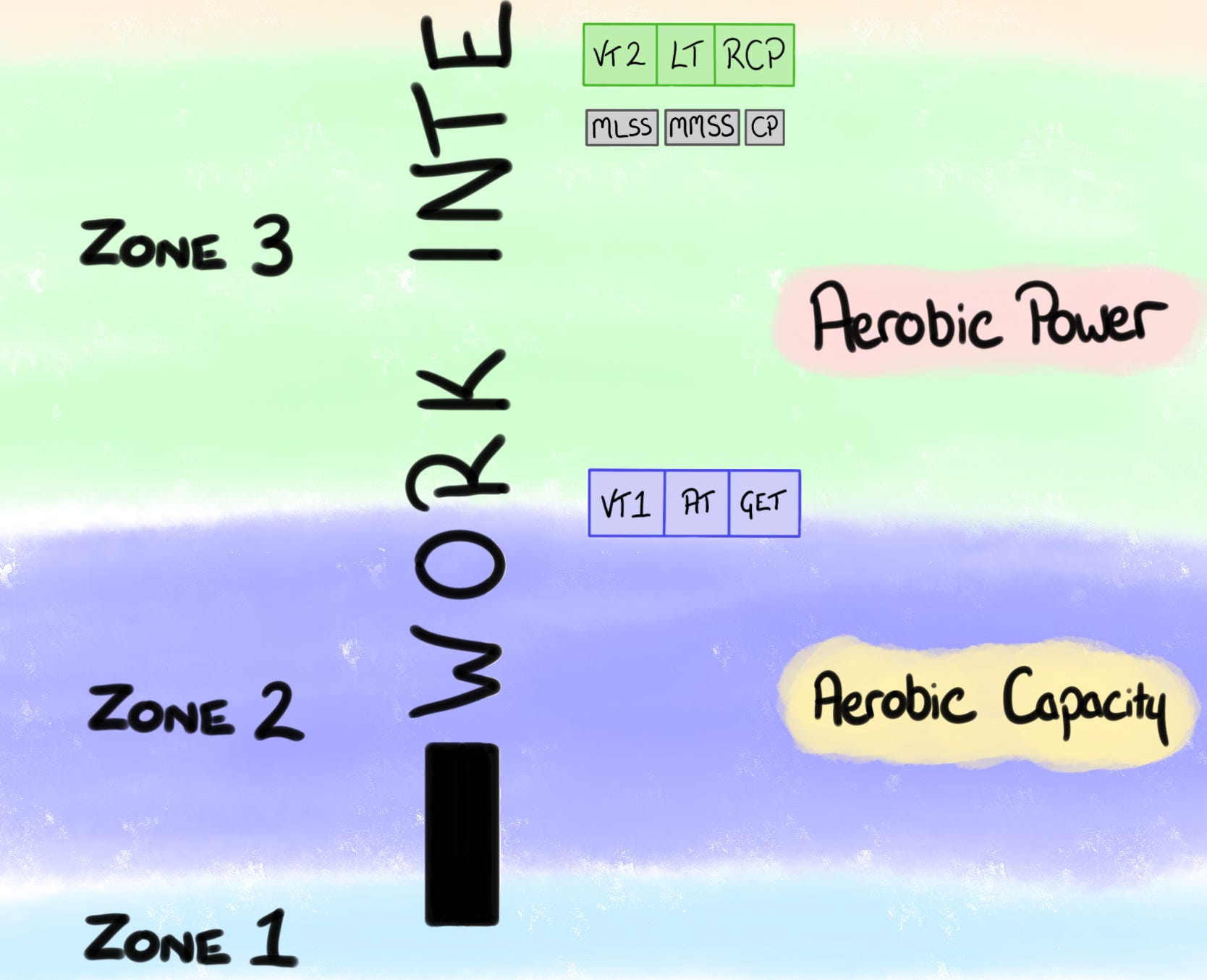
To develop Aerobic Capacity, work must be completed close to but below VT1 - Zone 2 work. These efforts can be sustained for a long time, so typically this work can be completed away from the team environment. This also makes it easier to individually assign intensities (running speed or heart rate) to each individual.
Aerobic Power
There is a precise measure of Aerobic Power, it is called VO2 Max. It is measured in milliliters of oxygen per kilogram of body weight per minute (ml/kg/min). This can be slightly confusing, because when training to improve Aerobic Power, we’re not going to be working at this intensity. At VO2max, your body is working incredibly hard and will be relying on a large portion of the ATP will be coming from Anaerobic pathways.
Instead from a practical perspective, when thinking about Aerobic Power and Endurance, we are thinking about increasing the % of VO2max we can work at for a prolonged time. In other words, how high of an intensity can our athletes work for a prolonged time. This means while the production of lactate from anaerobic pathways is under control. The intensity that this corresponds to is between VT1 & VT2.
To develop Aerobic Power, work must be completed at or slightly above VT1, but below VT2 - Zone 3. You should lean towards keeping it just slightly above VT1. The goal isn’t to push the buffering capacity to the max. That will come next. Here the goal is to increase the point that buffering begins.
What’s Next?
Next up we’re going to look at developing Anaerobic Capacity and Power. These pathways drive the explosive efforts that are crucial to sport.