
12. Applied Energy Systems

Already you’ve been introduced to the basics of the Energy System Pathways. Next up we’re going to take a practical look at how to develop Power & Capacity in the Aerobic and Anaerobic systems. However, to truly understand how to do that correctly, we need to learn about a few key thresholds. These thresholds are work intensities where distinct physiological changes occur. I originally didn’t intend to introduce this article until much later, however it is impossible to write a good practical training article without understanding these intensities.
The Graded Exercise Test
These thresholds are all identified on graded exercise tests. You’ve likely seen pictures of these at one stage or another.
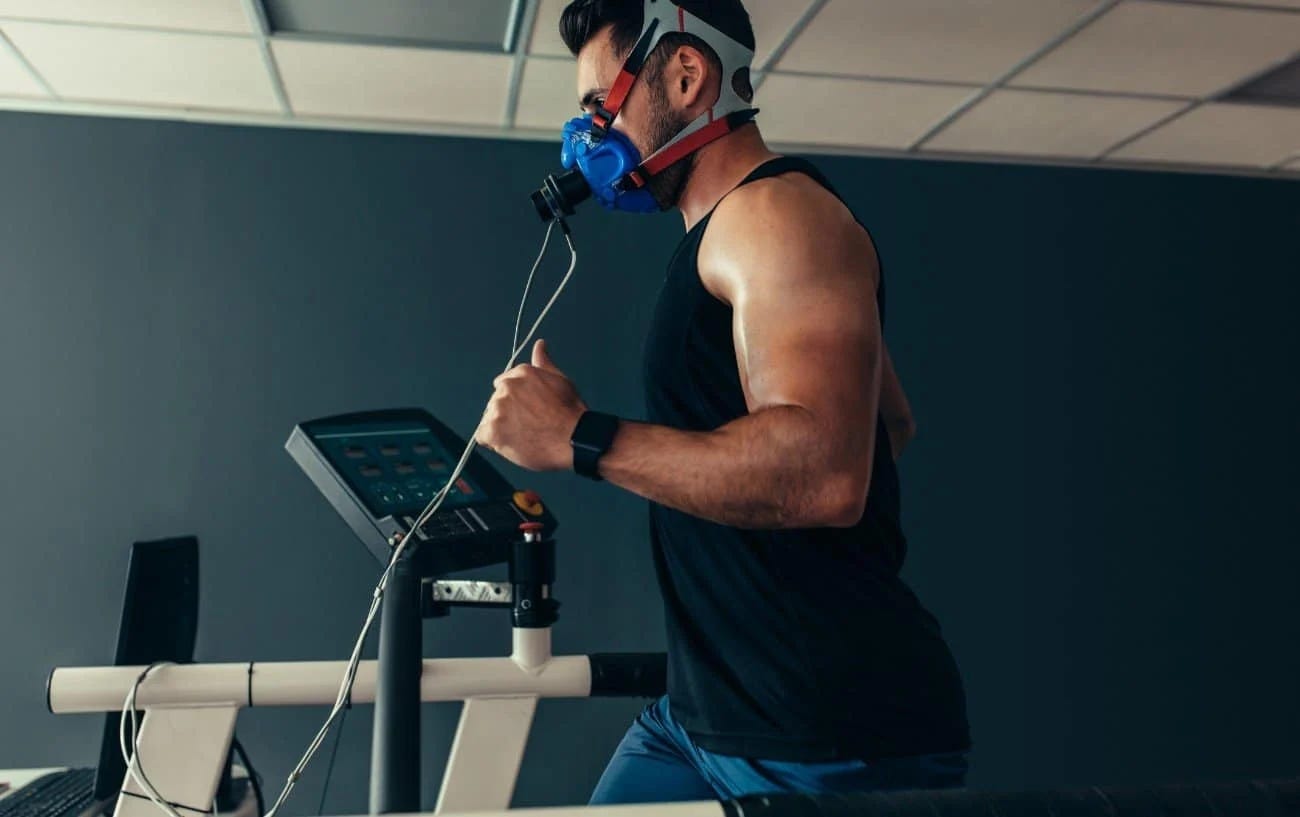
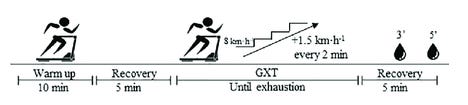
An athlete will run on a treadmill or bike. Their work intensity is slowly increased in stages. In running, this usually the speed they are asked to run at will be increased. In other cases the slope of the treadmill can be changed instead. Typically*, each stage lasts for 2-4 minutes, with a 1-minute active rest in between stages. *note many different testing protocols exist.
Many physiological signals are recorded during the test. The amount of oxygen consumed and carbon dioxide produced are measured with a device known as an indirect calorimeter. This is what the mask is attached to. It will also measure how much air is being breathed in and out. Other metrics such as heart rate and blood lactate levels are also tracked. The lactate level will be taken at the end of every stage during the rest.
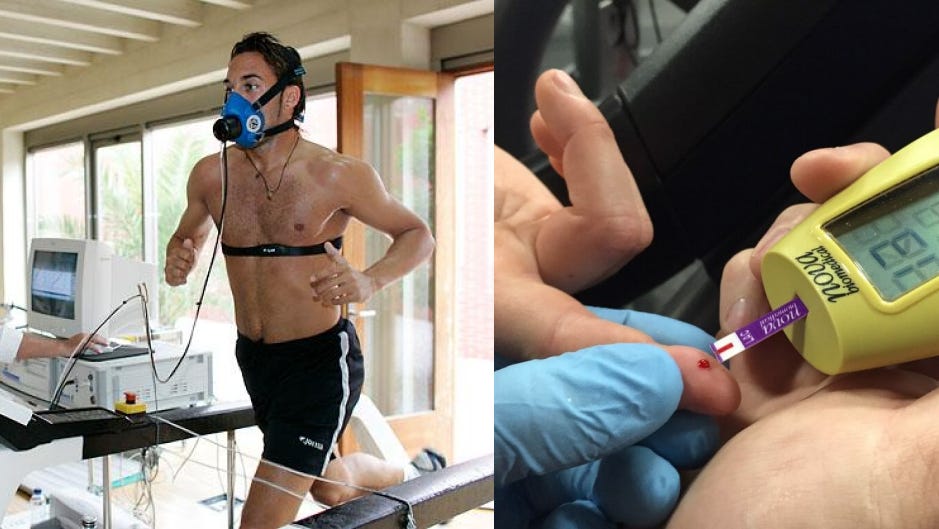
The reason each stage needs to last for 2-4 minutes is so an athlete can reach steady state. This is the point where the various metrics being tracked have stabilised. Right when you start exercising at any intensity, heart rate, oxygen consumption etc are going to increase. If you run at a constant speed, eventually the body will reach a point where it does not need the heart to move blood faster than it already is, or the lungs to take in more oxygen than they already are. It has reached a temporary homeostasis!
If we can reach steady state, then we take the average value of each metric during the last 30-seconds of the stage. These values are then linked to that running speed (work intensity) for that athlete. The test continues usually until a speed is reached that the athlete can’t maintain for the entire length of a stage.
This is where the thresholds come in. Along the course of the test, as intensities increase, each athlete will pass through the various thresholds at some point. From the tests we have determined the speed at which the various thresholds occur at and also what the athletes heart rate was at each point along the test. We can then program training either above or below those points to target specific adaptations by controlling speed or heart rate during training sessions.
Field Tests
This sort of testing is precise, complex and requires specialised equipment. To make things more accessible, various “field tests” have been developed over the years that provide a good approximation of the thresholds. These will be given their own article in the future!
The thresholds
So finally we come to the actual thresholds, the main reason for this article. When you understand what happens at each threshold, the picture becomes much clearer of why training above or below that point will result in a different outcome. The thresholds are laid out as follows:
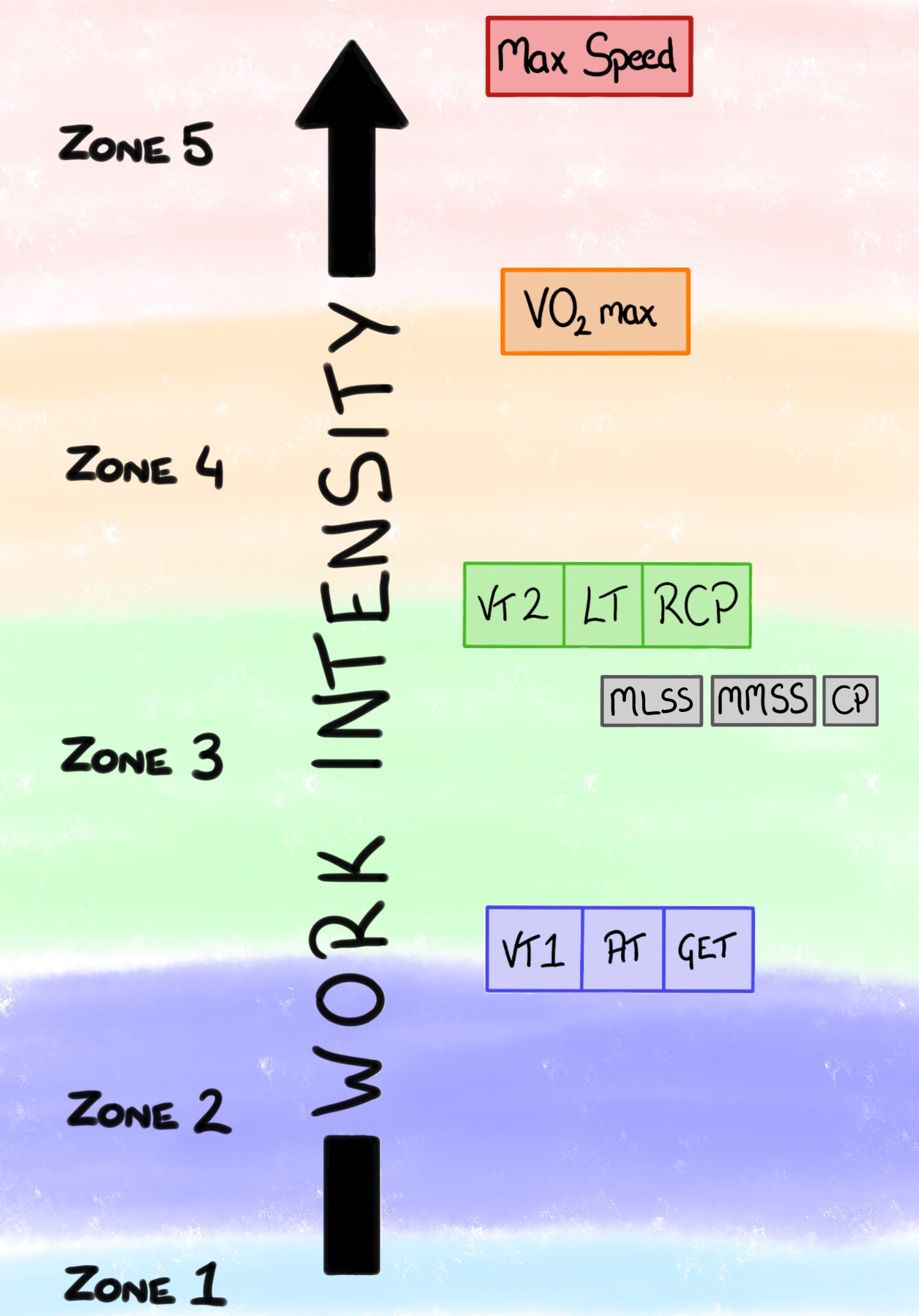
You’ll have noticed that there are multiple labels for many of the points. Over the years, researchers have come up with different names, to describe the same thing. We’ve also included Zones 1-5 which are a practical way to describe the intensity during training prescription.
Zone 1
Zone 1 is commonly an easy recover jog. It is just above walking but shouldn’t be difficult for your athletes to talk while they exercise at this intensity. The line between where Z1 ends and Z2 starts isn’t tied to any biological threshold and is usually based on how the athlete feels.
Zone 2
This is the most common zone that endurance work is completed at. While Z2 work can be challenging, it is well within the capabilities of the body. At Z2, the body is able to get enough oxygen to the muscles so the Endurance pathway is dominant.
VT1 - AT - GET
VT1: Ventilatory Threshold 1
AT: Anaerobic Threshold
GET: Gas Exchange Threshold
This point is marked by a change in the relationship between Breathing Rate and the Oxygen Consumption Rate. Breathing rate starts to increase faster than oxygen consumption whereas before this they increased at the same rate.
At this intensity, the Endurance Pathway isn’t able to provide all of the energy to sustain the effort. The Repeated Effort pathway starts to help, but as we saw in the Energy System article this pathway produces lactate as a byproduct. The body has a buffering system where it can remove the lactate in the blood, and this produces carbon dioxide which is expelled in the breath. So, the increase in breathing rate is due to this extra carbon dioxide.
Buffering: a process where a chemical is used to resist the change in pH in a solution
Zone 3
At Zone 3, the body is producing blood lactate but at levels that the buffering system is able to deal with. We’ll go into the more specifics in the upcoming articles but training here is mainly about increasing the efficiency of the buffering system.
VT2 - LT - RCP
VT2: Ventilatory Threshold 2
LT: Lactate Threshold
RCP: Respiratory Compensation Point
This point is marked by a change in the relationship between Breathing Rate and the Carbon Dioxide Production Rate. Breathing rate starts to increase faster than carbon dioxide production whereas before this they increased at the same rate.
At this intensity the Repeated Energy System is called on more and more given the rate it can produce ATP at. However, the buffering system isn’t able to handle all of the lactate that is being produced by this system. During Zone 3 blood lactate level rises slowly, however at this point it begins to rapidly increase.
Zone 4
After VT2, the demand for oxygen outweighs the supply. This intensity isn’t sustainable for long, as the body is hyperventilating in an effort to get more oxygen. Z4 is typically quite a narrow band as there is little difference in the amount of oxygen consumed between VT2 and VO2max.
VO2max - MAS
MAS: Maximal Aerobic Speed
VO2max is a persons maximal rate of oxygen consumption. It is usually expressed in millilitres of oxygen per kg of body weight per minute (ml/kg/min). When this point is related to running speed, we get MAS. MAS is widely used when programming training and we will look at it in more depth in the next article.
Zone 5 - ASR
ASR: Anaerobic Speed Reserve
The Anaerobic Speed Reserve is the difference between the speed of an athlete at their VO2max (MAS) and their top sprint speed. It is spoken about more as a concept when it comes to training prescription and when comparing athletes who may have similar MAS or Max Speed attributes.
Max Speed
Given this whole example was based on running, the scale will max out at the fastest speed each individual can run. In other words, it is the highest work intensity they can reach. This level of effort can’t be sustained for longer than a couple of seconds. Even Olympic level 100m sprinters can only maintain their top speed for 10-30 meters. The last 10-20 meters are more about who doesn’t slow down as much!
Training Points
The following points do not relate to a specific physiological threshold. Instead they are terms used in training to all roughly describe the same point, which is an intensity just slightly below VT2. From an energy systems point of view, this is the theoretically highest intensity that an athlete can sustain for an extended period of time. Although blood lactate is being produced, the buffering system is just about able to handle it and maintain a balance. Any increase in intensity beyond this will push the body over the limit. Note the time isn’t specified as other factors of fatigue will become relevant.
CP: Critical Power
MLSS: Maximal Lactate Steady State
MMSS: Maximal Metabolic Steady State
Whats Next?
Now that you have a comprehensive overview of the energy systems and Thresholds we can dive into the practical development of our athletes. Specifically we’ll look at how to increase the power and capacity of the Aerobic and Anaerobic systems. I hope you can appreciate how important understanding the thresholds are. Without this grounding you really don’t have the knowledge to understand how different types of training affect the body.